

Why Spec-Sheet Filter Ratings Fall Short on Real Job Sites
Fleet crews usually pick hydraulic filters by copying a filter micron rating off the manufacturer’s spec sheet. The number looks precise, so it gets treated as settled. But a working boom pump runs rapid high-pressure cycles, soaks in heat, breathes job-site dust, and restarts constantly — nothing like the clean, steady flow those ratings were measured under. Choose a filter from the sheet alone and it will pass contamination it was never sized to catch.
The wear that follows is predictable. Abrasive particles slip past an undersized or nominally rated element and embed in the tight clearances between pistons, spools, and control valves. Every pass scours microscopic material from machined surfaces, and that fresh debris recirculates to accelerate the next round of damage. Internal leakage climbs, response goes sluggish, oil temperature rises — a slow, compounding failure that a specification-only filter choice cannot prevent.
Contamination drives the failure, but duty cycle decides how fast. The sections below cover where the wear happens, where spec-sheet ratings part ways with field conditions, and how to size filtration to a specific machine.
Why Contamination Matters: The Hidden Cost Inside Your Hydraulics
Hydraulic oil contamination is the maintenance problem fleet managers most often underestimate, and the reason is timing: the damage starts long before a warning light or pressure fault shows up on the dash.
Silica dust, cement fines, and metal shavings stay suspended in the oil and circulate through every pump, valve, and cylinder. Each pass grinds microscopic clearances wider. The system compensates by generating heat, heat breaks the oil down faster, and the breakdown produces still more particles. The loop feeds itself, and it never corrects.
Once debris is in the circuit, the wear lands in predictable places:
- Pumps and valves: internal clearances are measured in microns, so particles larger than the oil film act like grinding paste on piston bores and spool valves.
- Heat buildup: contamination-driven friction raises operating temperatures, thinning oil and cutting load capacity just when demand peaks.
- Cylinders and seals: embedded abrasive scores rod surfaces, causing internal bypass, lost pressure, and sluggish boom response.
Duty cycle matters here far more than the spec sheet:
- High-frequency continuous pouring keeps oil hot for hours, so particles stay suspended and keep circulating instead of settling in the sump.
- Dusty demolition job sites load the reservoir with airborne silica, overwhelming filters rated for cleaner conditions.
- Cold-weather operation thickens oil, raises pressure differentials, and can force trapped debris through bypass valves.
The bill arrives as seized pumps, stuck directional valves, and scorched seals — repairs that idle a concrete pump truck for days and push crews onto rental units.
Contamination is not a cosmetic problem that develops slowly; it is the direct route to wear, heat, and unplanned downtime on the day you can least afford it. Size the filter micron rating to the duty cycles you actually run, not the tidy numbers printed on a spec sheet.
The gap between what a spec sheet promises and what a concrete pump’s hydraulics endure in a week is where contamination failures begin.
| Spec-Sheet Filter Rating | Typical Real Duty Cycle Demand | Recommended Filter Micron Ratings |
|---|---|---|
| 10 micron nominal | Steady boom pumping, moderate flow | 10 micron nominal / 25 absolute |
| 10 micron nominal | High-frequency pours, hot sustained flow | 6 micron beta-rated |
| 10 micron nominal | Dusty/demolition sites, heavy ingress | 3-6 micron absolute |
| 10 micron nominal | Cold-weather starts, thick oil, low flow | 10-15 micron, high beta ratio |
| 25 micron absolute | Fine proportional control, tight valve clearance | 3-5 micron absolute |
| 10 micron nominal | Mixed fleet, blended filter micron ratings by age | 5 micron nominal / 10 absolute |
The spec sheet barely moves across those rows, while the real demand swings with site conditions and machine age. Filter micron ratings belong to the duty cycle, not the catalog page. Match the cartridge to the worst realistic demand rather than the showroom default, and the oil stays clean and the cylinders stay responsive.
Micron Ratings Fundamentals: What the Number Really Tells You
Two hydraulic filters both stamped “10 micron” can behave nothing alike in a concrete pump truck. One protects the pump through years of punishing duty cycles; the other quietly lets damaging particles circulate. The difference sits in how the number was measured, not in the number itself.
Nominal vs. absolute
A nominal rating is a rough statistical estimate. It usually means the filter captures a percentage of particles at or above a given size, and the manufacturer defines that percentage. A “10-micron nominal” filter might stop only 50-70% of particles in that range, letting the rest pass straight through.
An absolute rating describes a defined capture threshold, typically a high efficiency point such as 99.9% of particles at a stated size. When comparing filter micron ratings, always ask which standard applies. For critical hydraulic protection, absolute is the honest one.
Beta ratios: the language of genuine efficiency
The beta ratio (written as β) states how efficient a filter is at a specific particle size. A β10 = 200 means that for every 200 particles of 10 microns entering the filter, one passes through — roughly 99.5% efficiency. A β10 = 2 means half of them sail right past. Same “10 micron” label, very different protection.
Why spec sheets fall short under real duty
Spec sheets come from controlled lab conditions at steady flow. A concrete pump truck never works that way: it surges, idles, and hammers through pressure spikes, shedding fresh contamination with every stroke. Add cold-start viscosity swings and bypass valve events, and real-world performance can fall well below the datasheet promise.
The takeaway
Treat the micron number as a starting point, not a guarantee. Demand the beta ratio, confirm the test method, and match filtration to your actual duty cycle.
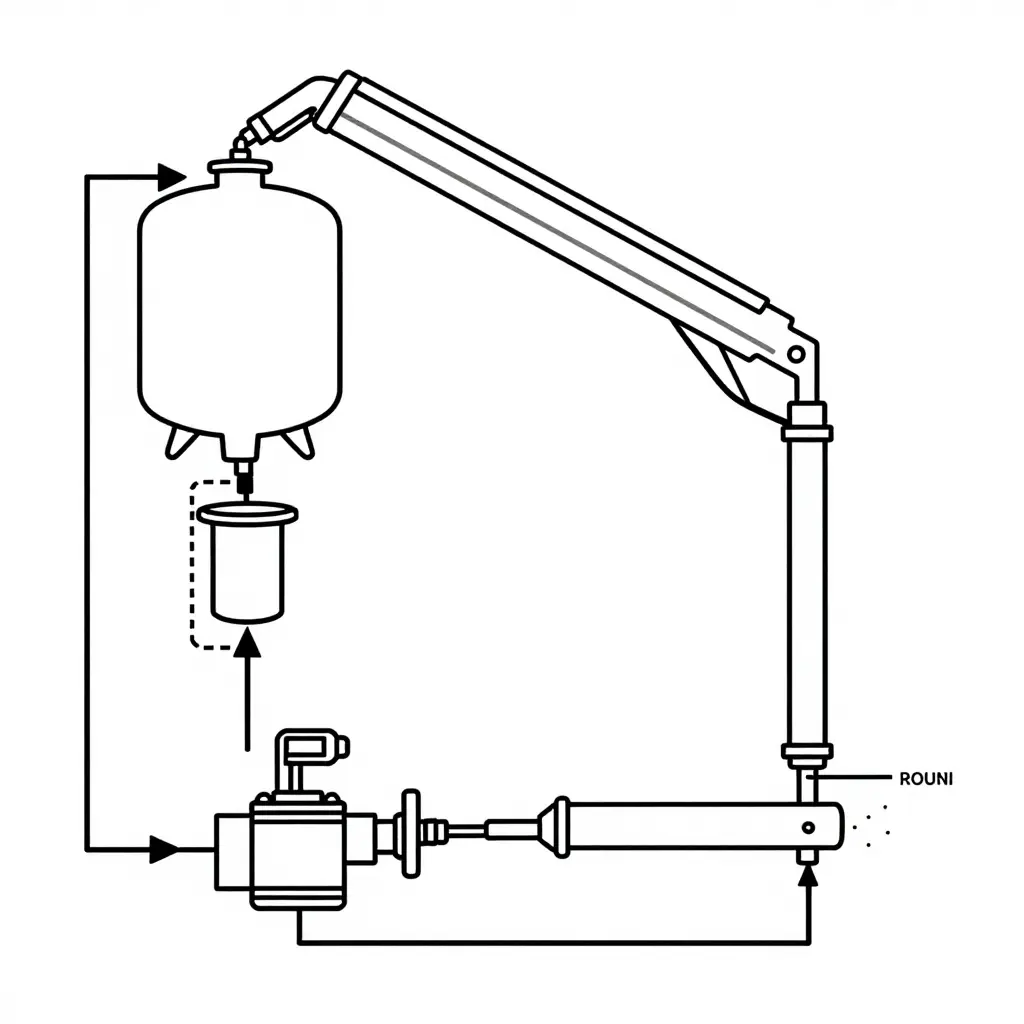
The schematic traces hydraulic oil from the reservoir through the pump, filter stage, and control valve to the boom cylinder, and it marks the two points where hydraulic oil contamination most often enters the system — the cylinder rod seal and the reservoir breather. Those entry points are why filter micron ratings should be chosen against real duty cycles rather than laboratory spec sheets.
Real Duty Cycles vs. Spec Sheets: Choosing Micron Ratings for the Job
The best filter choice rarely comes from the catalog. It comes from the pump’s real duty cycles.
Manufacturers test filter micron ratings on clean, steady-state benches. A concrete pump truck cycles, sits in dust, and swings through brutal temperature ranges. The spec sheet describes a laboratory, not a job site, and the gap between them is where premature wear begins.
Cycling frequency comes first. Every pressure spike sheds fresh wear particles from pumps, valves, and cylinders, so a truck that cycles hundreds of times a day generates contamination far faster than a machine that idles between pours.
Ambient dust compounds the problem. On a dusty site, breathers and seals ingest silica that the spec sheet never accounts for, and that load pushes you toward tighter filtration, not the looser rating printed for a controlled environment.
Oil operating temperature changes both viscosity and particle behavior. Hot, thin oil carries fines deeper into tight clearances; cold, thick oil can bypass a filter entirely through a relief valve. A rating that looks adequate at 40C may fail at 80C.
Service intervals tie it together. Long drain windows demand a rating that holds contamination below target for the full interval, not just at the start, and spec sheets rarely state what happens at hour 900.
The practical takeaway
Treat spec sheets as a starting point, then correct for duty. Match micron ratings to measured cycling frequency, dust exposure, and real oil temperature, and shorten intervals when conditions are severe. Sample the oil regularly, and let the results — not the brochure — set the rating. For fleet managers, that turns filter selection from a paperwork exercise into a reliability decision that protects pumps, extends oil life, and cuts unplanned downtime.
Duty-Cycle Factors That Change Your Micron Rating
- Particle ingress rate – how quickly cement dust, sand, and slurry reach the reservoir through breathers and worn seals.
- Oil operating temperature – steady heat thins the fluid, speeds oxidation, and lets finer debris circulate.
- Pump type and wear profile – piston, gear, and vane pumps each shed and tolerate particles differently.
- Cycle frequency – boom, agitator, and outrigger cycles per shift drive real flow and heat loading.
- Control-valve contamination sensitivity – proportional and load-sensing valves need tighter ratings than open-center circuits.
- Filter location – return, suction, or pressure-side placement limits which micron grade you can actually run.
- Seasonal conditions – monsoon mud, summer dust, and cold starts all shift contamination pressure.
- Reservoir breather quality – a poor breather quietly dumps airborne grit straight into your oil.
Concrete pump truck hydraulic oil contamination depends on how your machine really works, not on a spec sheet. Match your micron rating to actual ingress, heat, cycles, and control-valve sensitivity, and your filters will last longer and protect better.
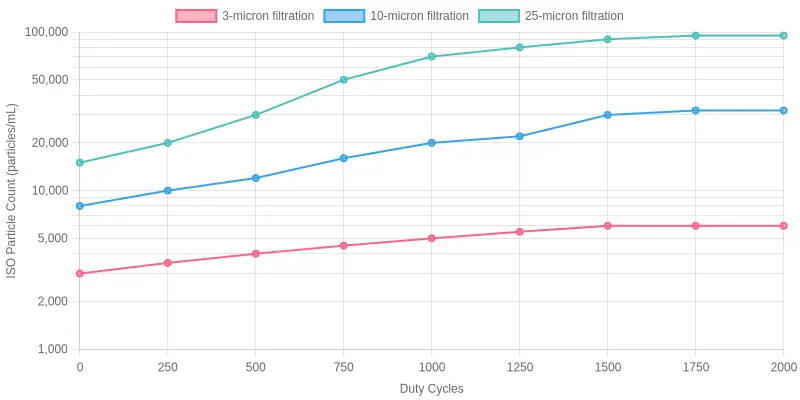
Chart: Particle Count in Hydraulic Oil Over Duty Cycles at Varying Filter Micron Ratings
How to Read This Chart
The x-axis tracks duty cycles, from a fresh oil change at 0 out to 2,000 cycles, while the y-axis plots the ISO cleanliness particle count per milliliter. Each line is a different filtration grade, so you can watch contamination accumulate as a concrete pump truck is worked hard on real jobs.
| Duty Cycles | 3-micron (particles/mL) | 10-micron (particles/mL) | 25-micron (particles/mL) |
|---|---|---|---|
| 0 | 3,000 | 8,000 | 15,000 |
| 250 | 3,500 | 10,000 | 20,000 |
| 500 | 4,000 | 12,000 | 30,000 |
| 750 | 4,500 | 16,000 | 50,000 |
| 1,000 | 5,000 | 20,000 | 70,000 |
| 1,250 | 5,500 | 22,000 | 80,000 |
| 1,500 | 6,000 | 30,000 | 90,000 |
| 1,750 | 6,000 | 32,000 | 95,000 |
| 2,000 | 6,000 | 32,000 | 95,000 |
Interpreting the Curves
Tighter filter micron ratings flatten the contamination growth curve. The 3-micron line barely moves even after 2,000 cycles, while the 25-micron line climbs steeply and never truly plateaus. The harder the machine works, the wider the gap between a tight and a loose filter, which is exactly why a spec-sheet number on its own can mislead a fleet manager choosing filtration for punishing field conditions.
Filter Selection Framework: Match Filtration to the Job, Not the Spec Sheet
The tightest filter on the shelf is rarely the right one. For concrete pump truck hydraulic oil contamination, the winning move is to size filtration to how the machine actually works, not to the cleanest number a spec sheet can print. Real duty cycles, from stop-start boom placement to continuous high-pressure pouring, dictate what your oil truly endures, so build every filter decision around the work the truck performs.
Step 1: Assess the Real Duty Cycle
Start with evidence, not assumptions. Log pressure spikes, oil temperature swings, and cycle frequency across a typical week. A truck running continuous pours faces far more heat and shear stress than one doing brief, intermittent placements, and those stresses change what contamination looks like in the reservoir.
Step 2: Establish a Target ISO Cleanliness Code
Translate that duty cycle into a cleanliness goal — for example, ISO 18/16/13 for high-pressure work. This target becomes the benchmark every filter choice must hit, giving you a measurable finish line instead of a vague “clean enough.”
Step 3: Choose Between Absolute and Nominal Micron Ratings
Filter micron ratings get misunderstood here. A nominal rating (say, 10 micron) captures only a percentage of particles at that size, while an absolute rating guarantees capture. For critical pump trucks with tight-clearance components, lean toward absolute ratings to protect valves and pumps.
Step 4: Set Filter Change Intervals
Tie intervals to duty cycle, not calendar time. Heavy continuous service may demand changes every 250 hours, while lighter work stretches further. Track pressure differential across the element to know when a filter is truly spent rather than guessing.
Step 5: Monitor Oil Condition Continuously
Sample oil regularly and trend particle counts over time. Continuous monitoring turns reactive breakdowns into planned maintenance, catching rising contamination before it damages expensive components.
The Bottom Line
Filters chosen for real duty cycles, not marketing specs, deliver the longest component life. Assess the workload, target a cleanliness code, pick the right rating, schedule changes, and monitor relentlessly. That sequence protects every downstream component and keeps your fleet pumping.
Frequently Asked Questions: Concrete Pump Truck Hydraulic Filtration
Is a lower micron rating always better?
Not necessarily. Going below what your system needs can restrict flow, spike pressure drop, and starve the pump. Match the micron rating to your component tolerances and real duty cycles. A 3-micron absolute element protects sensitive servo valves, but a standard 10-micron filter often serves open-loop concrete pump circuits well without choking flow or driving up cost.
How often should I change hydraulic filters under heavy duty cycles?
Use condition-based intervals rather than fixed timeframes. Heavy duty cycles on concrete pump trucks generate heat, vibration, and particulate ingress far faster than spec-sheet assumptions suggest. Sample the oil and watch pressure differential monthly; replace elements when the gauge nears bypass or ISO cleanliness drifts. Many fleets default to 500 hours, but real loading often demands closer to 250 to 300 hours.
Do spec sheets reflect real duty cycles?
Rarely. Spec sheets usually assume ideal laboratory conditions, steady temperatures, and clean fluid. Real concrete pumping involves shock loads, restart pulses, and dusty job sites that accelerate hydraulic oil contamination. Treat published filter life as a baseline, then adjust the micron rating and change interval using your own oil analysis data and machine telemetry rather than trusting the label outright.
What ISO cleanliness code should I target?
Most concrete pump truck systems with proportional valves perform reliably at ISO 18/16/13 or better, while high-pressure servo-controlled units may need 16/14/11. Set your target from OEM tolerances, then trend results over time. Chasing a code lower than your equipment requires often costs more in filters, pressure drop, and downtime than it saves.
Can over-filtering cause problems?
Yes. Excessively fine filtration raises pressure drop, opens bypass valves, and can cavitate the pump. Once oil bypasses the element, unfiltered fluid circulates anyway, defeating the purpose entirely. Over-filtering also shortens element life, increasing cost and maintenance frequency. Balance filtration efficiency against flow capacity, oil viscosity, and realistic contamination levels for the best outcome.
Further Reading and Resources
Maintenance knowledge pays off over the life of every machine, so keep learning in the routine. Our field notes on interpreting hydraulic oil analysis reports are a good start; compare them with the practical checklists in daily inspection routines for pump trucks. Fleet managers building a reference binder will want the troubleshooting matrices in diagnosing low-pressure faults and the seasonal guidance in cold-weather fluid management. For longer-range planning, bookmark component wear benchmarks and rebuild versus replace decision guides, along with our maintenance scheduling primer on preventive service intervals. Revisit them whenever duty cycles change.
Conclusion
Spec sheets describe filtration on paper; duty cycles describe it in the field. For any fleet manager serious about controlling concrete pump truck hydraulic oil contamination, the filter micron rating has to follow how the machine actually works — boom cycles, pressure spikes, ambient temperatures, and the ISO cleanliness code its components demand — not the rating printed in a sales brochure. The action steps are straightforward: log real operating conditions, measure particle counts at consistent intervals, match micron ratings to the tightest clearance in the circuit, and adjust intervals as duty cycles change.
Those steps only pay off when they become routine. Any truck that moves to a harsher site or a longer pour schedule will outgrow a rating chosen once and forgotten. Set target cleanliness levels, track particle trends, and change filters on evidence rather than the calendar, and contamination stays in check before wear begins.
The direction forward is proactive, condition-based maintenance: let measured data, not assumptions, decide when a filter is spent. Fleets that adopt that mindset get more life from pumps, valves, and oil — and stop paying for problems that sampling would have caught.